
What helps a path feel worth adding
Routes that make sense
We plan movement through the garden instead of dropping in a random line.
Surface picked for use
Grip, maintenance and appearance are weighed up together.
Protects lawns and beds
A clear route reduces the wear caused by daily foot traffic.
A path should make moving through the garden simpler
Good paths do not shout for attention, but you notice immediately when they are missing. You end up wearing tracks through the lawn, cutting corners across wet ground or balancing along edges that were never meant to be the main route. A planned path creates dependable access and connects entrances, lawns, patios and garden buildings in a way that feels obvious once it is there. With MW Landscapes Sussex Ltd, we start with the route itself, because the width, curves, steps, gradients and intended use all shape the right build. That practical thinking matters just as much as the choice of surface if you want the path to be comfortable rather than simply present.
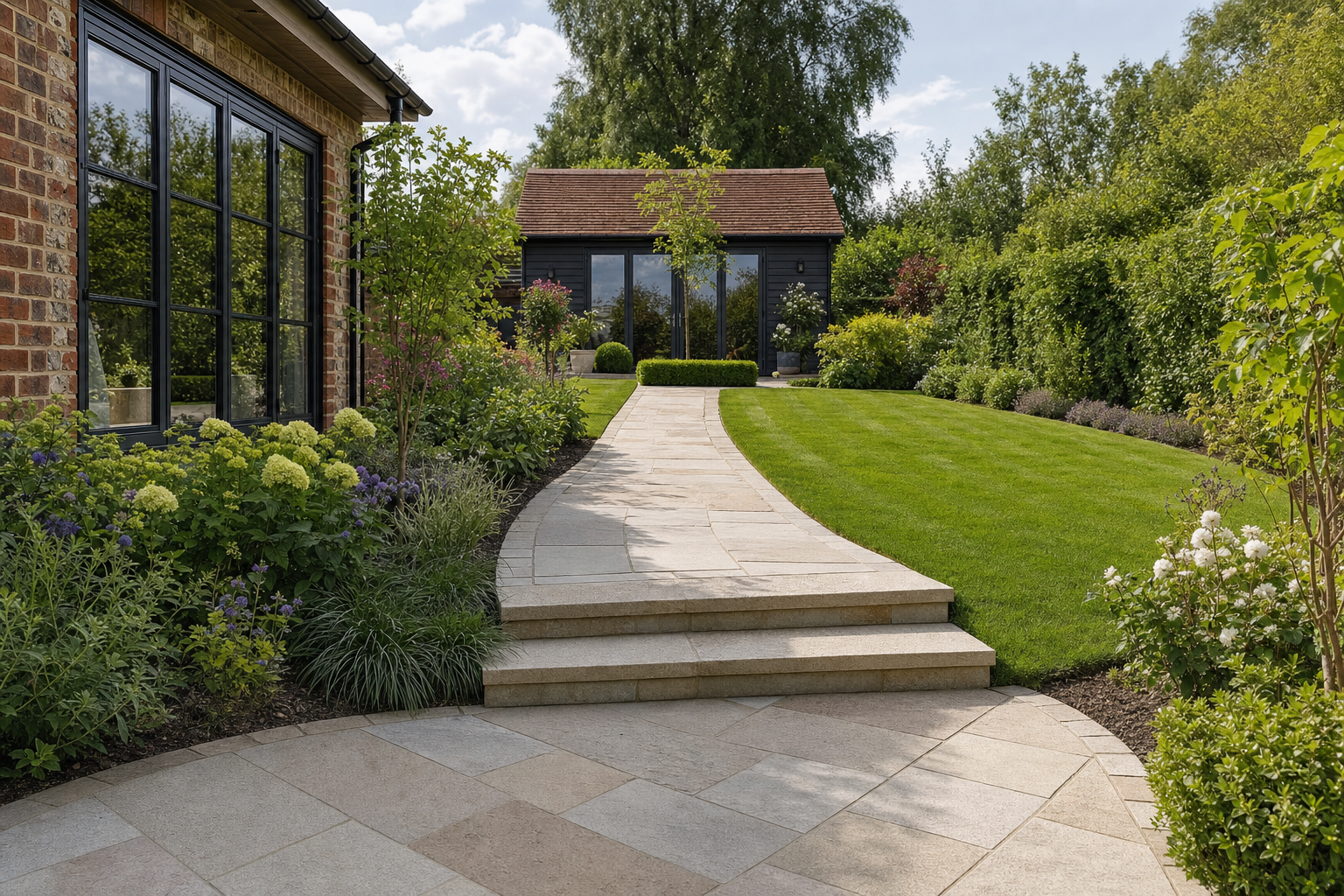
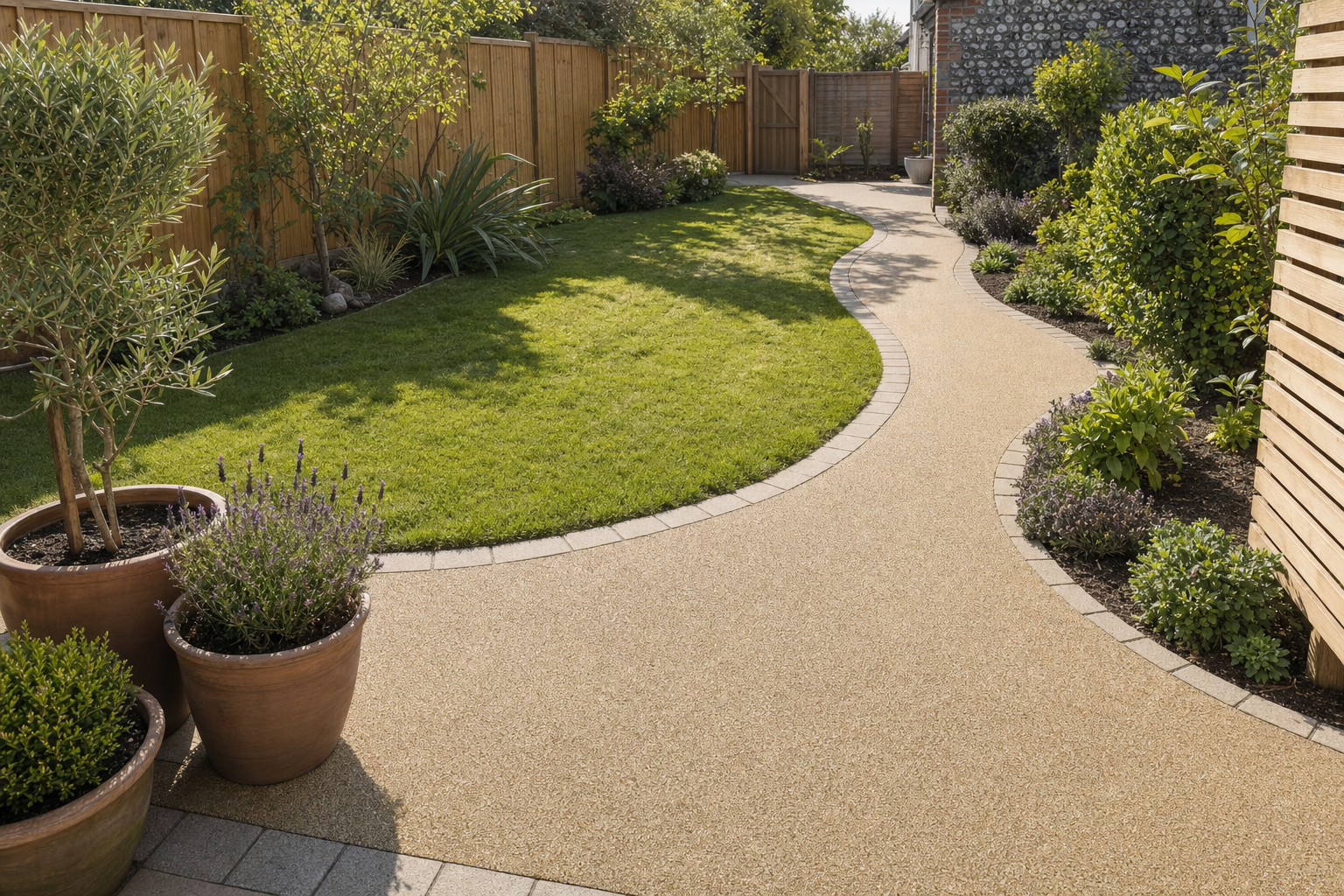
The route, surface and build all work together
Excavation, sub-base preparation, drainage falls, edge restraints and stable surface installation all help the path stay usable over time. We can also talk through broader surface qualities such as visual style, grip, maintenance, permeability and how the finish will sit with nearby landscaping. Paths often do more than provide access. They help organise the layout and protect lawns or planted areas from repeated foot traffic, which can save a lot of wear in the long run. Even a simple route benefits from being planned properly before it is marked out.
Frequently asked questions
How wide should a garden path be?
That depends on where it goes and how it will be used. A simple route to a shed has different needs from a path used every day between the house and the main garden area. We look at movement, comfort and available space before fixing the width in the plan.
Can a path include curves or steps?
Yes, provided they suit the layout and the way people use the garden. Curves can soften a route, while steps may be needed where levels change. The important part is making sure those choices still feel practical underfoot and do not create awkward bottlenecks or trip points.
Does a garden path need proper drainage falls?
Yes. Even a small path benefits from sensible falls and a stable base underneath. Without that, water can sit on the surface or the route can shift over time. Good preparation helps the path stay safe, usable and easier to maintain in ordinary weather.