
What helps a garden building sit properly
Sized for the structure
Accurate setting out helps the building fit the base as it should.
Stable support below
Concrete needs proper prep underneath, not just a quick pour on top.
Can link with other works
Bases, paths and building erection can be planned as one job.
A good building needs a base that stays level
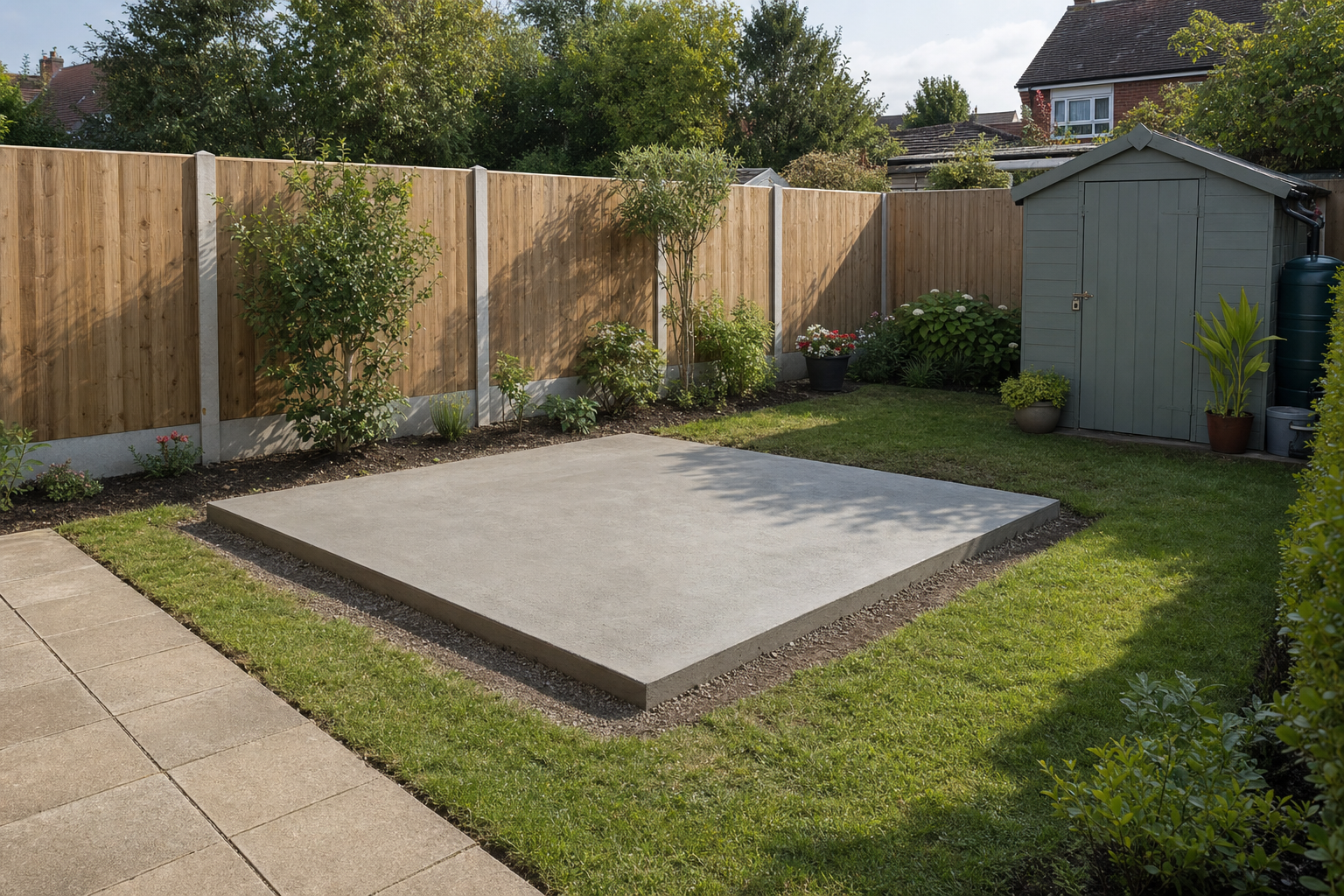
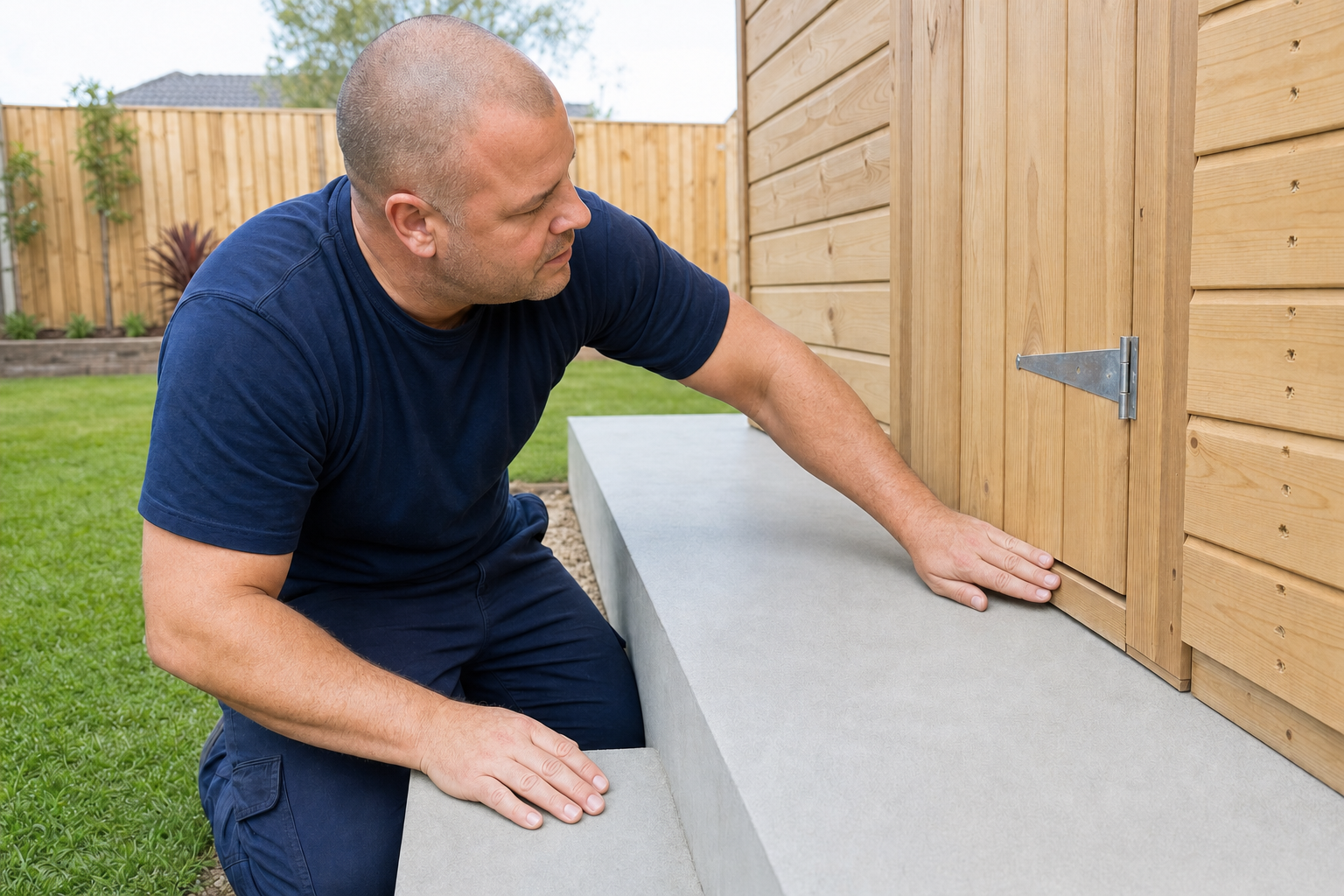
If a shed or garden building sits on poor ground, the problems usually show up quickly. Doors stick, corners settle unevenly and the whole structure starts working harder than it should. A correctly sized, level concrete base gives the building stable support and helps prevent movement once it is loaded. With MW Landscapes Sussex Ltd, we handle setting out, excavation, sub-base preparation, formwork, concrete placement, levelling and curing. We can also coordinate the base with paths and with the erection of a new shed or garden house, so the whole project is planned together instead of in disconnected stages.
Dimensions, access and curing time all matter
The right base depends on the size of the structure, the ground condition, surrounding levels and how water will run off once the area is complete. Accurate dimensions are important, because even a solid base is unhelpful if it is wrong by a few crucial inches. We also need to think about access for materials and about giving the concrete suitable time to gain strength before the building is loaded onto it. Sorting those practical points early helps the installation go far more smoothly.
Frequently asked questions
Why does a shed or cabin need a concrete base?
A concrete base provides a level, stable platform that helps the structure carry its weight evenly. Without that support, movement in the ground can lead to uneven loading, sticking doors or a building that starts to feel out of square. The base is doing more work than most people see.
How do you decide the right base size?
We need the building dimensions first, then we assess the position, ground condition and surrounding levels. Accurate sizing is important because the base needs to support the structure properly without causing awkward overhangs or alignment issues when the building is assembled.
Can the building go straight on once the base is poured?
Not immediately. Concrete needs time to cure and gain suitable strength before the structure is loaded onto it. The exact wait depends on conditions and the job itself, but rushing this stage can undermine the point of having a solid base in the first place.